





How local SEO/search works for multi-branch SMEs
- Search
- SEO
Turn local searches into consistent, high-intent enquiries.
Whether it’s 1 or 100 offices, we’re a local SEO agency helping businesses drive more calls, leads and customers across every location they serve.
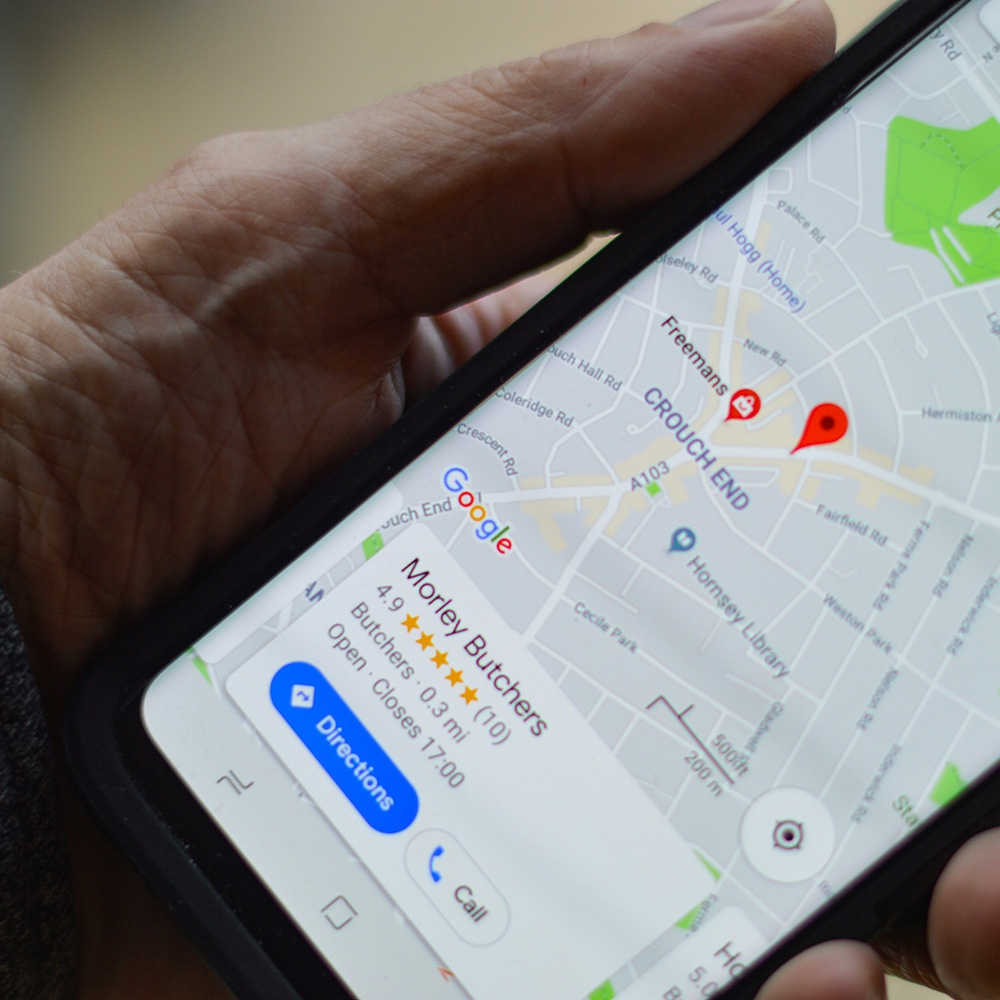
Operating across several locations means that visibility can quickly become inconsistent. One branch (typically your flagship one) ranks well, another barely appears. Some services attract enquiries, while others are invisible in search. That means you’re missing high-intent customers who are already looking for what you offer.
Try it, type in [Your Service] + [Your Location] into Google now. Do you rank? Who appears? Often, it’s companies that are smaller or “less capable” outranking you. While that might not feel great right now, the good news is that that means you’re in a position to tip the scales back. Right now, you’ve just not got the set up right. But with scalable local SEO services, you can stop losing leads every single day to businesses you know are objectively weaker.
Local SEO is the process of improving how and where your business appears when people search for your services in specific locations. It’s designed to increase visibility in those moments where potential customers are actively looking for a provider near them or within a particular area. You’ll be looking to rank for searches such as:
Rather than relying on a homepage alone, strong local SEO uses dedicated service and location pages that allow each branch, office, or service area to rank independently – alongside keeping your Google Business Profile optimised and active, review generating strategies, content that answers real questions and builds local relevance, local citation campaigns and more. But the key thing to remember: this isn’t a set it and forget it mentality. It’s a strategy to iterate on.

Most multi-location SEO fails because every branch is treated the same. The usual approach is to duplicate one location page, swap the city name, and hope each branch ranks. But search doesn’t work like that. Each location has different competitors, search demand, services, customer questions, reviews and local trust signals. A page built for Leeds won’t automatically work for Manchester, Birmingham or York.
Our approach is to build each location page as its own local growth asset. That means every branch page is shaped around:
The goal isn’t to create more pages for the sake of it. It’s to give each location a clear, relevant, and conversion-focused entry point in search. Done properly, multi-location SEO helps every branch compete in its own market, generate more location-specific enquiries, and scale without creating thin, duplicated pages that hold performance back. And as you grow, you’ve got the structure in place to launch your next business the right way.

Traditional SEO focuses on improving the visibility of one website or brand overall. Multi-location SEO is about getting more granular. It’s about helping each branch, office, or service area rank in its own local market, ranking for location-specific services and showing up in the Map Pack. In short: normal SEO improves your overall visibility. Multi-location SEO helps every location become discoverable in its own right.
Usually, yes – if you want each location to be found in search. Search is geographic, it doesn’t assume one page can represent multiple markets. Dedicated pages allow each location to rank for its own local demand. One generic “locations” page rarely gives each branch enough context to rank well. The key is not just creating a page for every location, it’s making each page useful, specific, and genuinely relevant. Thin duplicated pages with only the location name changed are unlikely to perform well.
Yes. If each location has a physical presence and serves customers directly, it should have its own Google Business Profile. Google Business Profiles are designed to represent individual locations, not entire regions. A single profile is unlikely to rank consistently across multiple geographic areas, which limits your visibility in local search and the Map Pack. Having separate profiles allows each branch or office to build its own local relevance, reviews, visibility and search presence.
AI search relies on structured, consistent information across the web. That includes your Google Business Profile, listings and citations and location pages. If these signals are unclear or inconsistent, visibility in AI-driven results becomes unlikely. Strong local structure is what allows your business to be surfaced accurately. There’s no guaranteed way to “rank” in ChatGPT, Gemini and the others, but strong local SEO foundations make it easier for AI-driven search tools to understand, trust and recommend your business.

To The Point is a quarterly search-first digital marketing newsletter packed with useful tips, tools and industry updates you should know about, including: