
In-house SEO vs. agency? How to decide
- Opinion
- SEO
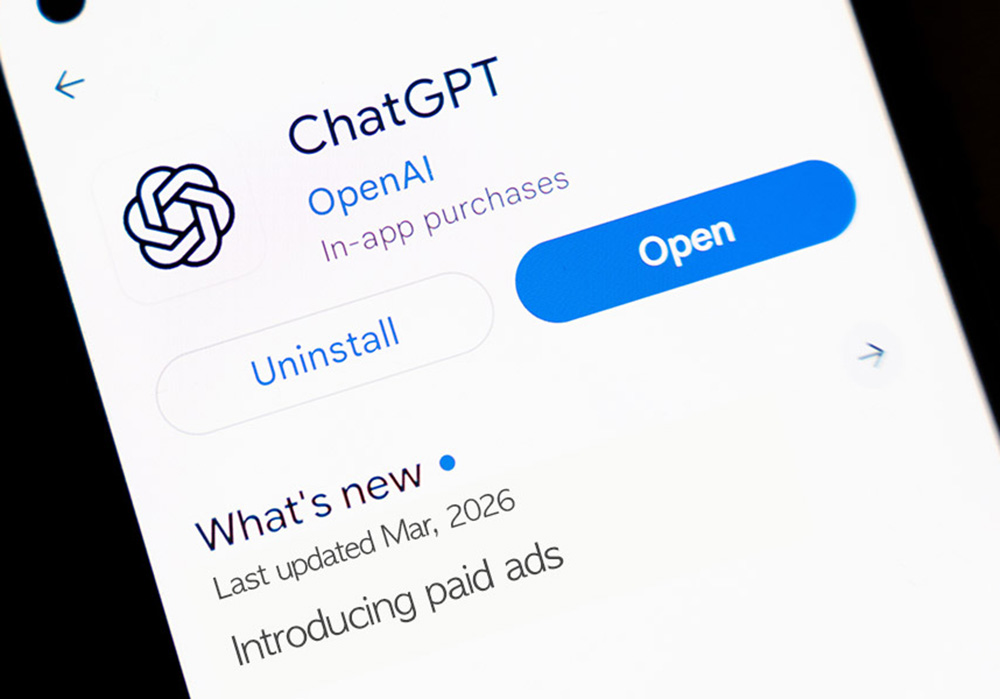
ChatGPT ads might be grabbing the headlines, but the bigger story is what they signal. Paid placements inside AI answers are becoming a new way to be discovered, and visibility now depends on whether your brand appears in the right context.
This blog will cover:

For a long time ChatGPT has felt very different from the rest of the internet.
No pop-ups
No sponsored banners.
No “10 results per page” packed with ads.
Just a question and an answer.
But that is about to change!
Recent reports show ads appearing inside ChatGPT responses for some users in the US and they look a little something like this: A user may ask ChatGPT for tips on setting up a home gym. After ChatGPT provides the tips, a sponsored placement appears from a fitness equipment brand, complete with a branded logo and a clear “Sponsored” label after just this one prompt, not after a continued conversation.
In other words, ChatGPT may already be treating single, high-intent questions as potential advertising moments. If that continues, AI platforms could start to behave like a new kind of search environment. Instead of scrolling through pages of links and ads like you would on a traditional search engine, users get a single answer first. Then a sponsored suggestion appears as a possible next step.
So the experience might look something like this:
A user asks a question → ChatGPT generates a full answer → Then a sponsored suggestion appears that aligns with the user’s intent.
Simple. Direct. And very different from traditional search.
OpenAI has also confirmed that advertising tests inside ChatGPT are beginning, although the rollout is being introduced carefully. For now, ads are expected to appear mainly for Free and Go users, while paid tiers – including Plus, Pro, Business, Enterprise and Edu – are intended to remain ad-free.
Here’s what OpenAI’s CEO, Sam Altman, has to say on the subject…
Ads aren’t designed to influence the answers themselves. ChatGPT generates its response first, with any sponsored placement appearing afterwards rather than interrupting the conversation. Sponsored placements will be clearly labelled and kept separate from the assistant’s responses. Conversations won’t be sold to advertisers, and users can opt out of ad personalisation.
ChatGPT ads aren’t like the Google ads we’re used to. Here’s why:
In short, ChatGPT ads are less about competing for clicks and more about being a timely, contextually relevant suggestion after the AI has built trust with the user. That means success won’t come from louder creative or bigger budgets, but from genuinely fitting the moment: the right message, in the right context, delivered when it actually adds value.

Although the rollout was sudden, it probably shouldn’t be a huge surprise that ads are landing on ChatGPT. Running a large language model isn’t cheap. By some estimates, one LLM query costs 10 times a traditional search query. And with 2.5 billion prompts every day, those costs add up fast.
Most of ChatGPT’s users are on the free plan, approximately 97% of users, which is essentially money down the drain for OpenAI. Introducing ads is a way to start monetising that massive audience without charging everyone.
Plus, let’s be honest, all platforms eventually go through this stage. Netflix, TikTok, and even LinkedIn have introduced ads. ChatGPT following suit almost feels like a rite of passage.
And there’s another reason: competing with Google. Ads are a massive revenue driver in traditional search, and OpenAI is positioning ChatGPT as a new kind of search platform. Introducing ads is one way to start building a revenue model while scaling its reach.
In short: ads help cover costs, monetise the free tier, and keep OpenAI competitive, all while giving brands a chance to reach users in a whole new kind of search experience.
ChatGPT ads also raise a big question for marketers: what happens to advertising budgets?
Like with anything new, there will be some initial reticence to go all in here. Like any new channel, there will probably be some initial hesitation. Most advertisers won’t rush to shift large budgets immediately because the performance data simply isn’t there yet. Early adoption will likely come from brands that are comfortable testing new formats and experimenting with emerging platforms.
If the channel proves effective, though, it will likely follow the same path we’ve seen before. Platforms like social media started as experimental channels before eventually becoming core parts of most advertising strategies. If ChatGPT ads show strong performance, they could eventually sit alongside platforms like paid search and social in the standard media mix.
Whether that means larger budgets or simply a redistribution of existing spend will depend on the advertiser. Some brands may allocate an incremental budget to test the channel, while others may shift spend away from existing platforms if AI placements begin to outperform them.
Another big question is how these ads will actually be created and managed. At the moment, that isn’t clear. OpenAI haven’t released the first visuals of the interface yet or what the mechanism would be for advertisers to build and run campaigns.
There’s also the question of value. Given that most AI queries are informational rather than transactional, how much return advertisers will realistically see is still uncertain. Ultimately, this will depend on user behaviour.
For example, I can imagine savvy shoppers using AI tools to find the best price for specific products. Someone might ask a question like: “Tell me where I can find the cheapest Nike Air Pegasus in a UK size 9.”
In those moments, the user is clearly close to making a purchase decision. If ads appear at that stage, they could potentially be very valuable for advertisers.
Of course, introducing advertising into a conversational AI platform raises some valid concerns.
The biggest risk is user experience. For a lot of people, ChatGPT feels different from the rest of the internet. You ask a question and you get a helpful answer. It feels clean, simple, and focused entirely on helping the user.
Introducing ads inevitably changes that dynamic slightly. The risk is that a tool people see as helpful and conversational could start to feel more like a sales environment. If advertising begins to feel intrusive or overly commercial, the platform could quickly lose the trust that made it valuable in the first place.
However, it’s also important to apply a sense of realism here. Every successful platform eventually needs a sustainable business model. Monetisation is inevitable, the real challenge is implementing it in a way that doesn’t damage the product.
Google faced a very similar issue in the early days of search advertising. When ads were first introduced, they weren’t always relevant. Users searching for celebrities, for example, might have been shown ads for insurance simply because advertisers were bidding broadly on keywords. Unsurprisingly, this led to frustration and declining user satisfaction.
Google eventually solved this problem by introducing Quality Score, a system that rewarded relevance. Ads that closely matched the user’s search intent received better placement and cheaper clicks. Over time, this pushed advertisers to create ads that genuinely answered users’ queries, sometimes even better than the organic listings.
If ChatGPT is going to introduce advertising successfully, it will likely need to take a similar approach. Relevance will be critical. Sponsored placements must feel like helpful suggestions rather than interruptions. If ads align with the user’s intent and appear at the right moment, they can enhance the experience rather than undermine it.
But if they feel forced, irrelevant, or overly frequent, users will notice very quickly.
ChatGPT ads might feel like a big shift, but in reality they’re just the next evolution of digital advertising.
If the format works, paid placements inside AI answers could become a new way for brands to reach people at the exact moment they’re asking a question. Instead of competing across a crowded search results page, advertisers could appear as the natural next step after the AI has already helped the user.
For marketers, the immediate reaction will likely be cautious testing rather than big budget shifts. But if performance proves strong, there’s every chance ChatGPT ads will eventually find their place alongside paid search and social in the media mix.
The real challenge will be getting the balance right. ChatGPT works because it feels helpful and conversational. If ads start to make it feel overly salesy, the experience quickly loses what made it valuable in the first place.
But if they’re relevant, well-timed, and genuinely useful, they could become a powerful new moment for brands to show up.
To The Point is a quarterly search-first digital marketing newsletter packed with useful tips, tools and industry updates you should know about, including: