
Should I be jumping on AI Search?
- Opinion
- Search
- SEO

Search isn’t broken, but the way people discover your business has fundamentally changed.
This blog will cover:
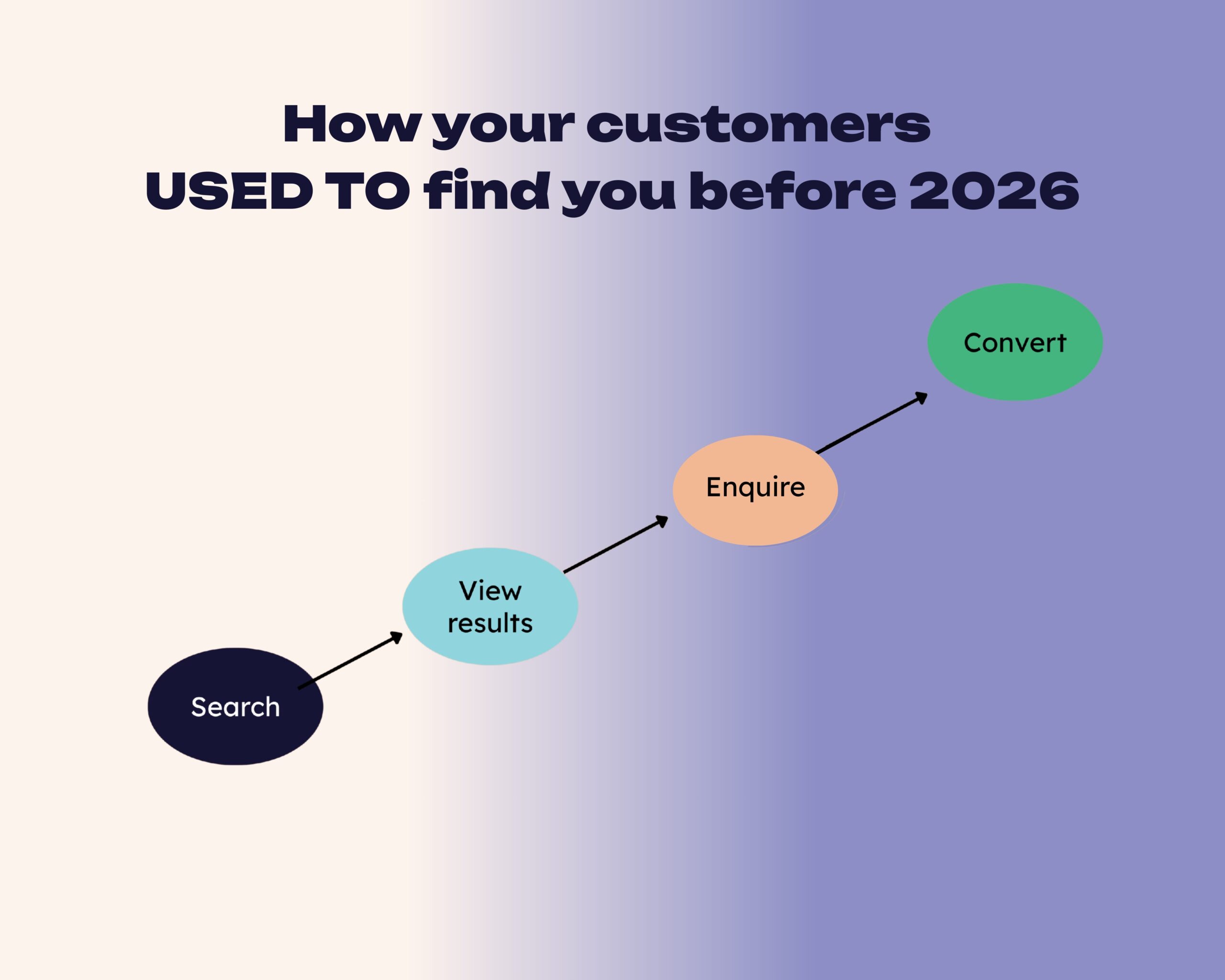
Search used to look pretty linear. A user would search on Google → Scroll through blue links →
clicks a website → compare options → convert. You were simply competing against the other people that had a place on page 1.
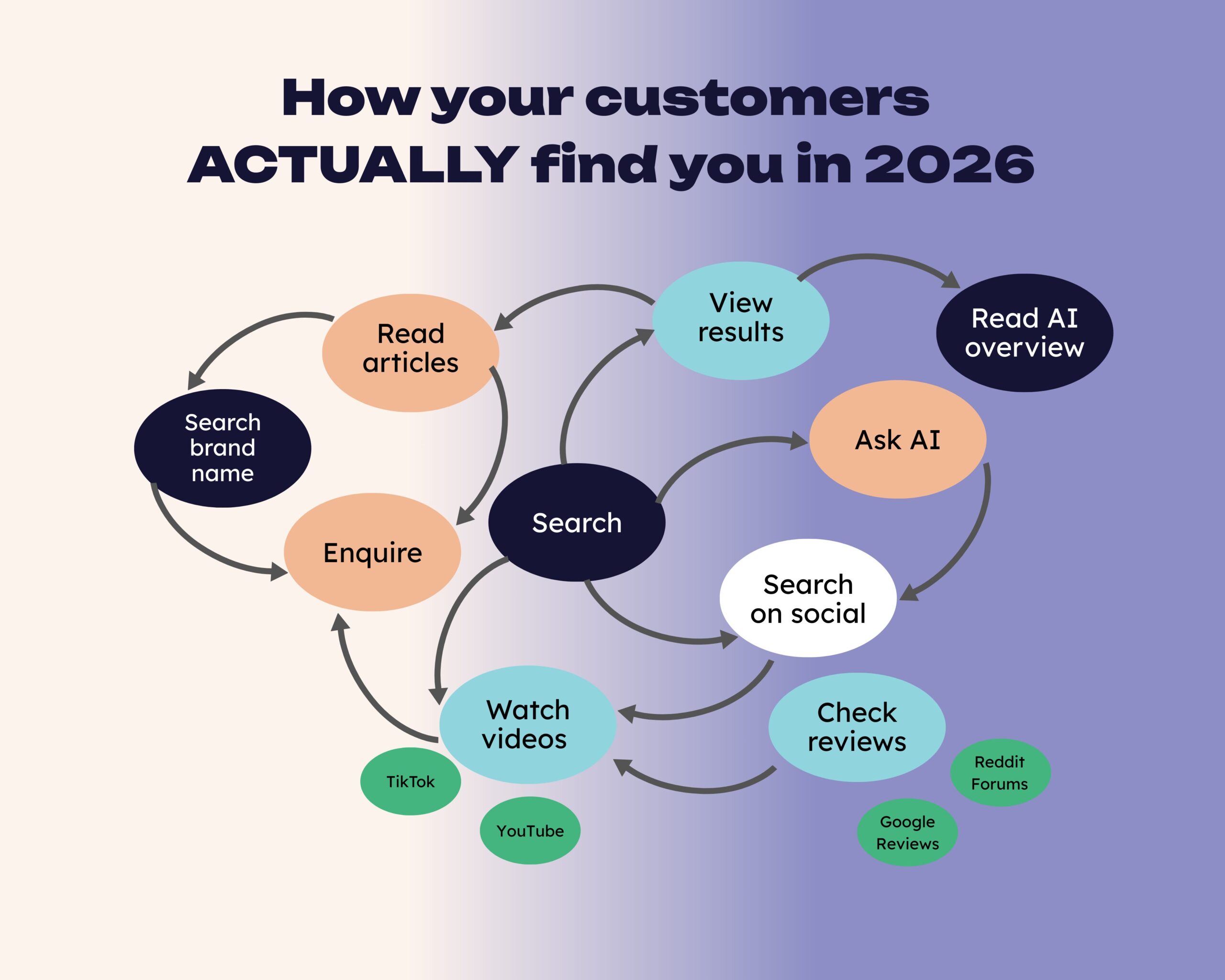
AI-powered search, social discovery, recommendation engines and intent-led journeys have quietly dismantled the traditional sales funnel. Customers no longer search, compare, convert in neat stages. They explore, validate and decide across multiple platforms, often without ever visiting your website until the very end. In practice, this could look like…
They’re still searching, but it’s not search as we used to know it.
Deep breath. Yes it looks intimidating. Yes it looks confusing. But don’t worry, this actually brings a great opportunity to be more visible and we’re here to help you make the most of it!
The benefits of being present across the entire search journey include:
To stay visible in 2026, brands need to:
AI systems reward authenticity and originality. This means moving away from generic, surface-level content and providing clear points of view, first hand insights and original analysis demonstrating your expertise on the topic, rather than content written for an algorithm. You’re the subject expert – use that knowledge! And show Google why you’re qualified to add to the conversation – an easy example is be linking your blog content to author pages with credentials. The goal isn’t to repeat what’s already out there, it’s to be a source, not a summary.
Discovery happens across various platforms: on Google, AI-powered SERPs, social platforms, such as LinkedIn, TikTok, Reddit, YouTube; and, industry communities, forums, and newsletters so it is important you have a distributed search presence. Because expertise + narrative = discoverability.
But showing up consistently doesn’t mean posting the same thing everywhere.
A search-first approach starts with understanding where your audience actually searches. That means doing the audience research and building a strategy around the platforms your customers use to find answers and validate decisions.
If your audience searches on TikTok, you need to be answering their questions there – using platform-native, short-form video that explains problems, tells stories and shares insight.
If they use Reddit, you need to participate in the spaces where those conversations already happen – contributing helpful, experience-led insight where decisions are validated, not sales messages.
Platform-native content means starting with one core insight or idea, rather than one piece of content. That core insight is then adapted to match the format, language and expectations of each platform.
This is how brands stay visible in 2026: not by being everywhere, but by showing up in the right places, in the right way.
Intent now matters more than keywords. A search-first approach now focuses on the context around a customer’s problems, decision stages and outcomes. When creating content you may want to consider questions, such as:
That’s why ranking for a keyword alone isn’t enough. If your brand isn’t part of the wider conversation – across AI search, social platforms, communities and trusted content – you’re invisible at the moment decisions are formed. Your content needs to work harder. Build brand authority, not just traffic Trust is the new success metric. For a long time, trust was based on who ranks the highest – if a brand showed up at number one, people assumed it was the best choice. That’s no longer how decisions are made.
Today, customers trust the brands they recognise – the ones they’ve seen repeatedly across platforms, formats and conversations. If someone is discovering solutions on TikTok, scrolling LinkedIn, reading Reddit threads, or watching YouTube, the brand that feels familiar often wins – regardless of who technically “ranks” first. Authority is built through consistent messaging across platforms, strong topical depth (and this means owning the topic, not just dabbling in it) and being mentioned (positively) beyond your own site.
AI – and humans – don’t just rank pages, they evaluate brands.The goal isn’t more visitors. It’s to be the brand that AI, platforms and people repeatedly recognise as a reliable choice.
Clarity is a clear advantage. Modern Search – for humans and AI search platforms alike – depends on: clear structure, simple language, logical content flows, strong internal linking, explicit signals like schema to remove ambiguity, all alongside and content designed to be summarised, extracted, and interpreted.
If humans struggle to understand your content, machines will too. The brands that stay visible are the ones that remove friction – making it easy for users to get answers and easy for AI to interpret meaning, relevance and authority.
Search hasn’t disappeared… it’s grown.
Customers now discover brands through a web of AI-driven, social, and recommendation-led experiences. The traditional funnel is gone, but the opportunity is bigger than ever.
And instead of being stressed about how SEO has changed… use it to your advantage to make sure you’re a brand that wins. ????
To The Point is a quarterly search-first digital marketing newsletter packed with useful tips, tools and industry updates you should know about, including: